

I was talking with a friend this week, a dad like me, who has become very frustrated lately by something quite simple; he cannot get his young son to sit down and go to the bathroom. Any of you in the room who are parents can relate to the daily struggles to get kids to brush their teeth, do their homework, take a shower… And these feelings of powerlessness are present from the little daily frustrations in early childhood to the more important ways parents hope to influence teens and young adults.
You don’t have to be a parent to relate to the feeling I’m talking about, everyone knows what its like to wonder if you’re powerless. We feel the same things trying influence neighbors or coworkers.
Everyone knows what its like to feel powerless; there’s quite a lot of that feeling going around right now. I was struck by a comment I heard on podcast this week, that more and more people in our country, on both sides of the aisle, are feeling like we are electing people who don’t listen to us, such that we are now involved in a war that most people did not ask for and don’t want, which is causing immense suffering throughout the Middle East and around the world; we even witness politicians in great positions of great power who seem unable to exercise it, so broken is the system. How can you not feel powerless and like you have no voice.
Of course, the much greater tragedy is the livelihoods of those who are truly without power. The families and children caught in the warzones and cut off from food and medicine; refugees and immigrants on the endless journey to find a safe place to call home. If you and I, who are rather comfortable, can feel powerless, can we even imagine the extent to which people in those situations must wonder, does anyone notice what is happening to me? Does God even care? And whether one is in a position of great, immediate risk, or whether you are presently okay but just feel helpless, it is a spiritual matter to feel frustrated because you sense that you can’t do anything, that no one is listening, that you have no voice.
Today we’re going to look at one of the most important stories in the Bible, one you could preach a book of sermons about—there is so much in it. And we are going to look at something that it tells us about Jesus: that though the world suggests in so many ways that some people are less important; every human person is somebody in the eyes of God, and we must keep telling that story.
In order to really appreciate this story, you have to follow the brilliant move that the Gospel of John makes in telling it—you have to compare today’s story to the one that was told last week, the one that comes immediately before it.
Last week we talked about the story of Nicodemus. Nicodemus you’ll remember is a powerful person. A pharisee, a leader in the Temple, he becomes interested in Jesus and the wonders he is working and the powerful changes he is making in people’s lives. He wants to know more, but many of his peers are skeptical of Jesus, so Nicodemus goes to meet him in secret under the cover of darkness. Jesus is challenging but patient with Nicodemus, who will come to see that Jesus is indeed worthy of all the fuss people are making over him, and finds out who he really is in first sticking up for Jesus, and then later going to anoint Jesus’ body for burial, even at risk of losing his own power. Jesus helps this man, who was already powerful, but who did not really know what his power was for; he helps him find meaning and purpose—Jesus helps him learn to use his voice.
But that story was not enough to tell us who Jesus is. So now we have this story:
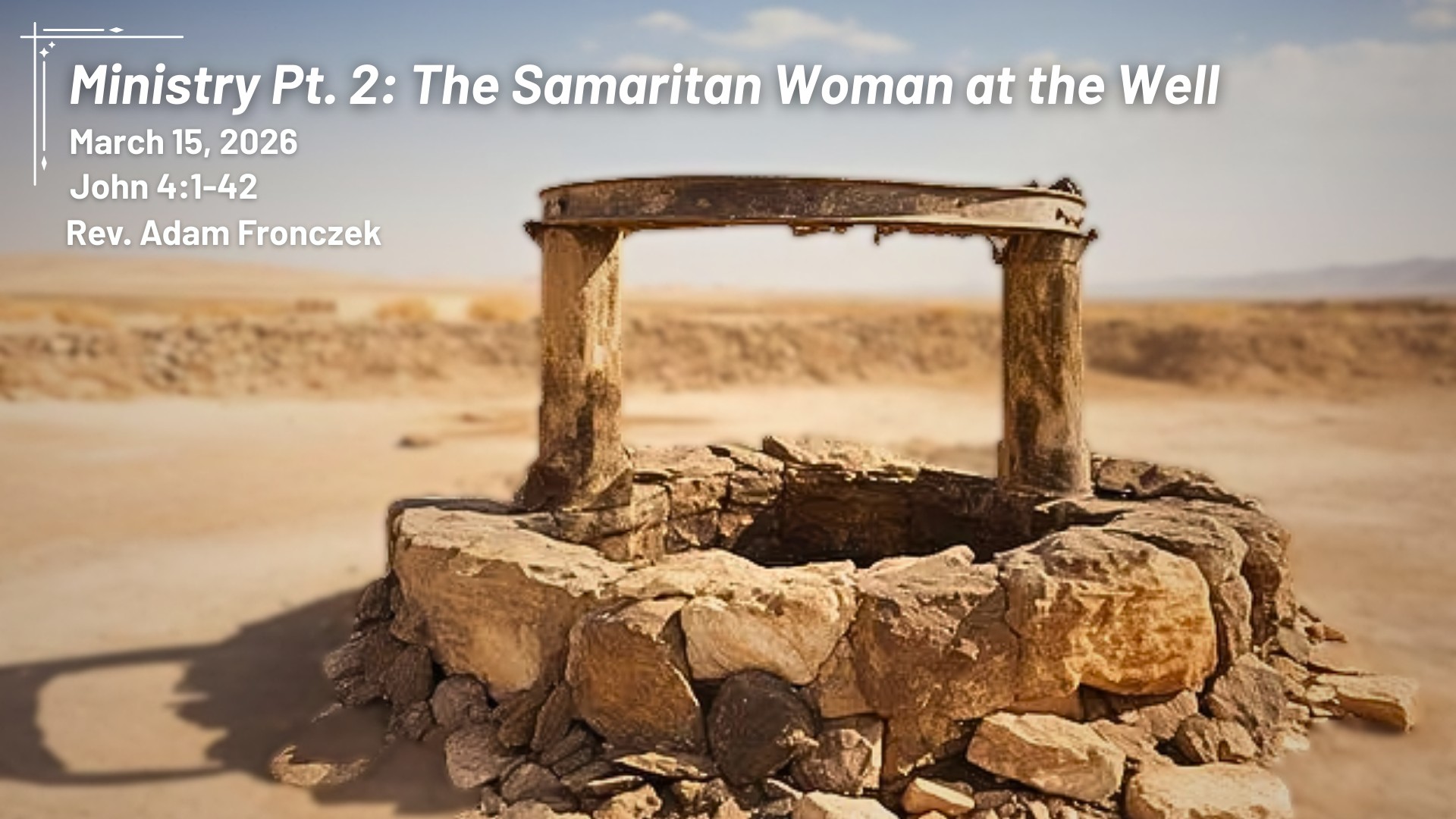
Jesus leaves Judea, and is traveling through Samaria. It is noon, Jesus is hot and tired, and stops by a well to rest. The magic of the story begins when someone else arrives. Everything about this story is going to happen in direct contrast to the story about Nicodemus.
Nicodemus was a pharisee, a leader of the Jews. Samaria was home to a group of people who he would have called heretics and enemies. Before they were in the city; now they are in the country. Before it was nighttime; now it is noon. Before, the story was about Jesus talking to a man—a person with autonomy and power and self-determination; now it is a woman, Before, we met Nicodemus by name; now we meet a woman of Samaria, who the story leaves nameless. Everything about these contrasting stories, which come one right after the other, would lead one to believe that Nicodemus was an insider, a person of consequence, a person who mattered, and that this story beginning about the woman of Samaria is about an outsider, a heretic, a person who does not matter… But as soon as the story starts, the surprises begin.
To start with, the story of Nicodemus was short, but this one is quite long—we only read the start of it. John, our author, wants us to be struck by how much time and attention is devoted to this story. This woman Jesus meets at the well will have a conversation with Jesus, just as Nicodemus had done. But the woman, this outsider, this nobody, figures out Jesus much more quickly. Just like Jesus had spoken to Nicodemus in metaphor about being born again of water and the spirit, of transcending the material things of this world to see the eternal things that matter most, Jesus will speak this Samaritan woman about living water from a well that never runs dry and never leaves one thirsty again. But while Nicodemus, who was a religious authority and probably thought he knew the answers…while Nicodemus must go away and think about what Jesus is offering… the woman of Samaria sees Jesus’ wisdom right away. She says to him, right then: “Sir, give me this water, so that I may never be thirsty or have to keep coming here to draw water.”
The conversation seems to go in a different direction as they talk about the woman’s struggles with marriage and infidelity, but even that exchange reinforces the point even more that everyone matters to God. There is no illusion that this person is blamelessly fulfilling the law or is highly respected by other people. She is a regular human being; a flawed, broken sinner. And when that has been clearly established, this humble woman is clever enough to ask Jesus who he is, he tells her directly—I am the One, I am he; I have the living water you seek. Neither your place of origin, your gender, or your personal history matters to me, says Jesus. My living water is for you.
The disciples appear, and are shocked to find Jesus talking to this woman of Samaria; and they, who are still ignorant of who he really is, they completely miss what is going on, entering into an argument about where Jesus will get his next meal. But the woman of Samaria is already gone. She is on her way back to town. The story says she doesn’t even bother to take the water jar she had brought with her to the well, for she is no longer thirsty. And when she arrives back in town, she tells her friends that she has met a Messiah who knew everything about her life and loved her anyway, and she invites them to follow her and meet him too, and she does so using exactly the same words Jesus had used when he called his first disciples: in our translation, she says, “Come and see…”
It is a powerful, convicting, and beautiful story about who Jesus is, and it turns upsidedown everything we think about how the world is supposed to work. This woman of Samaria, in all of her limitation and powerlessless and brokenness—she is Jesus’ ideal disciple. She is perfectly suited to carry his good news into the world. The one who everyone else in the world would be so eager to think of as nobody, is somebody to him.
This is a powerful story of inclusion. It extends what we said several weeks ago when we talked about what we believe about God: That God not only blesses Abraham, but tells him that he is to be a blessing to all people…To Muslim, Christian, and Jew, to the Palestinian and Iranian as well as the Israeli, to refugee and the immigrant, to people of all genders and races, the poor and the hungry, to lift up the weak and bow down the mighty. This is who we hope to be—people who remember that though the world treats so many people as less than human, they are all somebodies in the eyes of Jesus. God has not forgotten about them, and neither can those who choose to follow Jesus.
We are spending time this winter and spring talking about core beliefs about God, Jesus, and the Holy Spirit—what we know about God and what God is calling us to do. This powerfully inclusive giver of living water—this is who Jesus is, and this is who he calls us to be. New Elders and Deacons today, and all you members of this family of faith—this radically inclusive love is what we are here to practice.
In the first minutes of the sermon, I acknowledged just a few of the many things in the world that can leave us feeling helpless and powerless. But our lesson, our wisdom, comes from the woman at the well. This story is meant to remind every one of us that we are not so powerless as we think. The woman in this story is no more equipped than you or I to change the whole world…and yet meeting Jesus gives her the encouragement to go back to her town and tell them that she matters and to remind them that they matter.
Our feelings of powerlessness are often amplified by modern media, where every hour of the day our handheld devices suggest to us that some lives matter more than others. There are a lot of bad headlines and discouraging information out there. But we cannot give up. This is the story we have to keep listening to: Every human person is living a life that matters to God. We cannot allow ourselves to become convinced that our voices do not matter, for long after the earthly power brokers of this week pass away, we will still be here to worship a God who believes in the sanctity of every human life.
It is often disorienting and impossible to be faced with the volume and variety of suffering that meets us in this world each day. But it is for that very reason that I find beauty in the ordaining today of our Elders and Deacons, the laying on of hands that they experienced from those who have gone before them, and the prayers that were joined in by all who worship with us today—because of what it suggests about how we respond in faith. We are part of a great family of faith, called with all of our collective hands and feet, hearts and voices, to work toward the healing of the world in the many ways each of us may feel called. How is God’s call being felt in your life today?
Let us pray: Gracious God, at every turn there seems to be some story trying to take our humanity away, and to convince us that some lives matter more than others, and that we have no voice. God, when those false ideas threaten to take us over, help us to return to you and your story. To remember that every human being matters equally in the eyes of God, and that we are called to love one another as you have loved us. Amen.